" height="62.839999771118165px" id="uonDrAwlK" width="715.678974609375px"/></g></svg>)
North
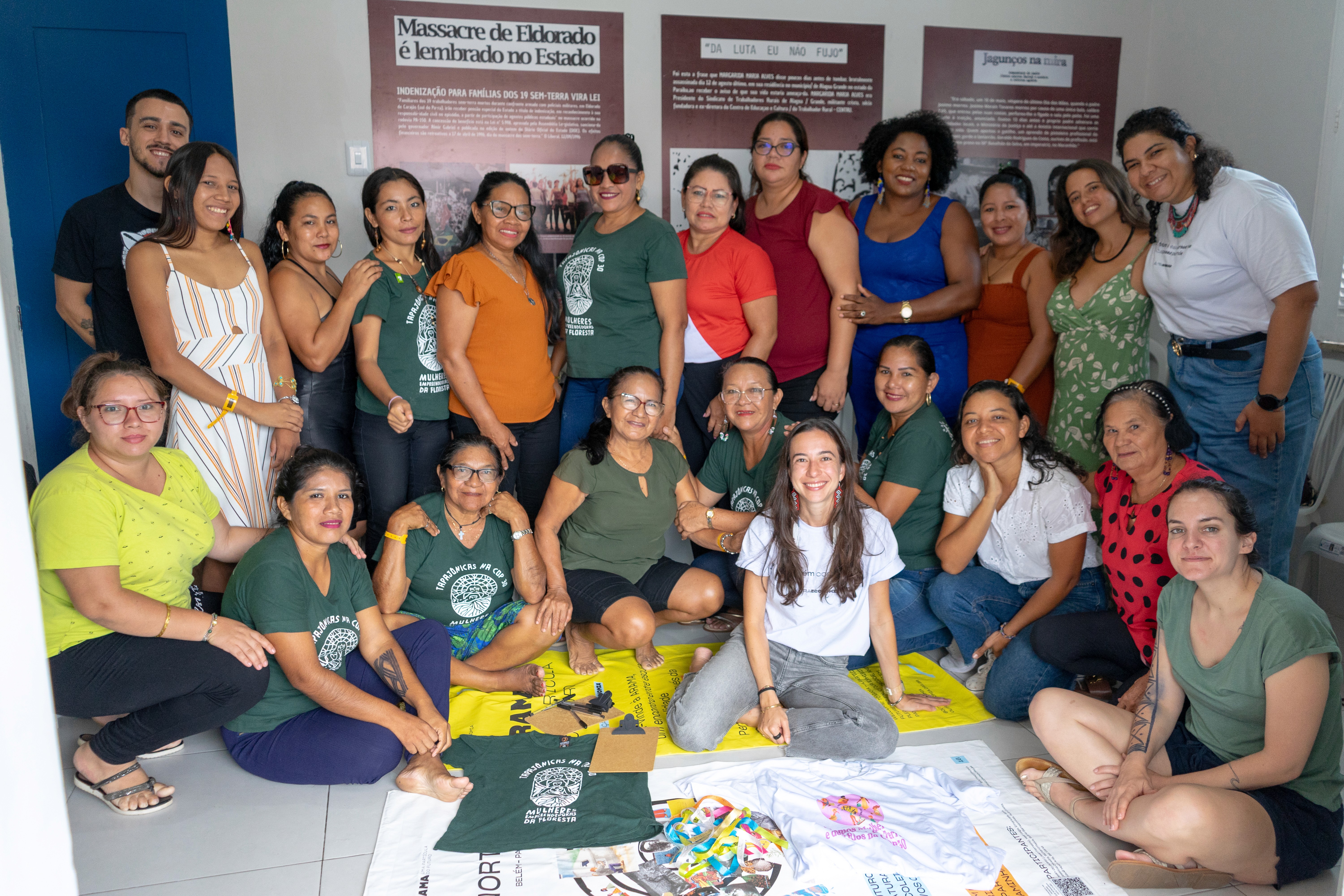
House of the People at COP
"May people be able to remain in their territories without having to exert so much effort for it, without having so much threat to the rivers. May all of nature allow us to live while conserving, maintaining, being human while being nature, thus, nature-human."
"That we women may unite and achieve our goal, which is one: to have our say and our voice."
"To have artistic spaces with open doors and financial support."
Manifesto dream by participants of the meeting held at the House of the People during COP
Meeting held at the House of the People at COP, in Belém-PA, on November 17, 2025.
We dream that women are more valued, heard, and present in decision-making spaces. That collectives are truly collectives: with affection, genuine care, less competition, and more mutual support. That no girl or woman loses the sparkle in her eyes or is destroyed by violence. That there is respect in relationships (including marital ones), with recognition of the mission and dignity of women. We dream that we do not depend so much on money to realize our dreams and do not live to pay debts. We dream of more collective, solidarity-based, regenerative, and territorial economies, where the goal is not just profit, but a good, just, ecological life. That money circulates in the territory, strengthening communities, and that we can redefine "success" so that it is less about meritocracy and more about connection, sufficiency, and dignity. We dream of policies and concrete support for small farmers, artisans, and groups of entrepreneurial women from the forest like the Tapajonic women and other invisibilized workers. We believe that keeping the forest standing means ensuring that people can remain in their territories and villages, without constant threats. We need to fight against the impacts of agribusiness and its advance in our territories. An important part of this is our dream of achieving land demarcation and settlements, recognizing that these are territories of native peoples, not just "settled" areas. We dream of quality health care for women, especially for women in rural areas. That serious illnesses like breast cancer do not condemn so many companions who lack access to treatment. That young women and older women are together in shared spaces of exchange, building the future based on memory. It is important that elderly people are valued as guardians of history, coexisting with youth to share memories, ways of life, milling houses, and traditional knowledge. We dream that spaces like the Rural Family House, agricultural schools, and others that follow a field pedagogy can be reference points and gain visibility and care from those who run our governments. Art, culture, and spirituality also populate our dreams – we dream of cultural centers for Carimbó groups, well-structured agroecological collective kitchens where we can cook together, serve coffee, and produce. We dream of more milling houses, craft houses, and seed houses. We recognize dream, music, carimbó, poetry, embroidery, collage, murals, collective work, conversation circles, and spirituality as "ancestral technologies" of struggle and materialization of dreams. Individual dreams that resonate in this circle, such as being a mother, having a home of one’s own, finishing home renovations, traveling to other parts of Brazil and the world, opening a riverside restaurant, and learning Portuguese better, connect with these collective dreams because they find strength in the collective and constitute us as human beings.